
There’s a nice park across the street from where I get my haircut.
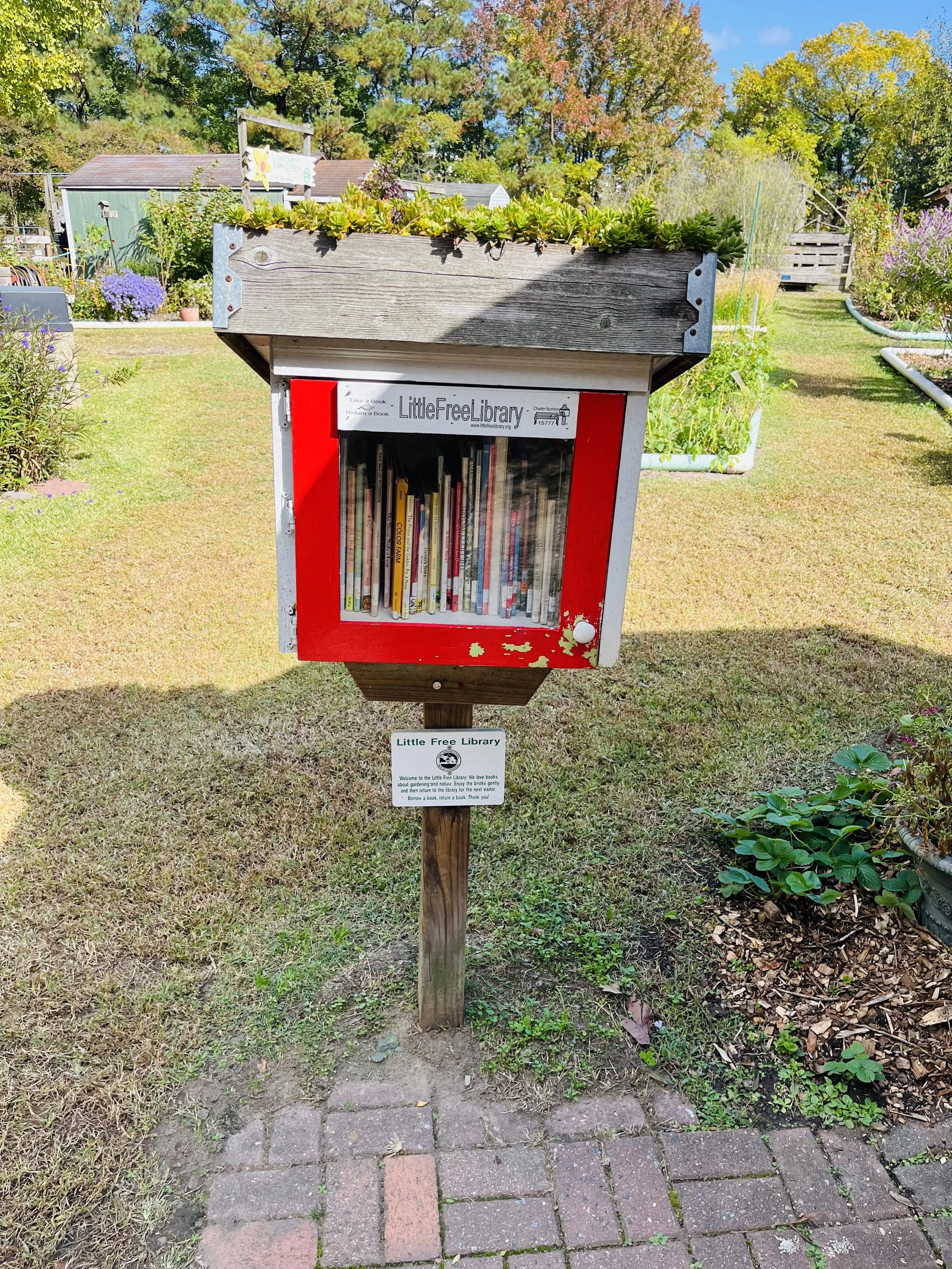
The park has several of these “little free libraries” set up.
Even though they are for kids, and stocked with the usual kids’ fare, I still feel like a big kid most of the time - so I always have to flip through and see if there’s anything interesting.
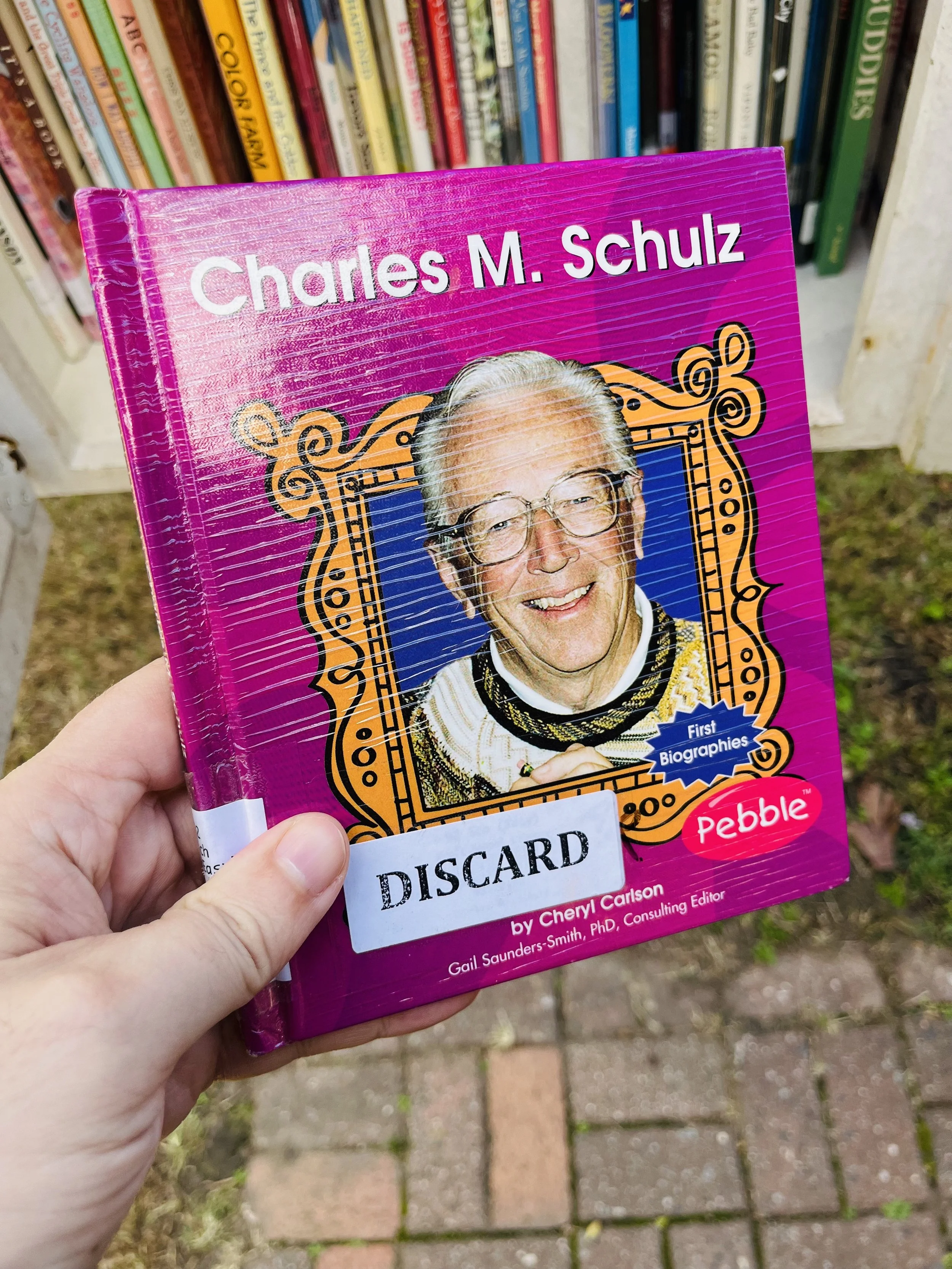
This one had a discarded library book about Charles Schulz, so naturally I stopped to read it.
The casing was weird and bubbly, and the book was very short and to the point.
Its brevity was what I found most interesting.
There was a timeline that ran across the bottom with a few significant dates in Schulz’s life, and then a summary of Peanuts:
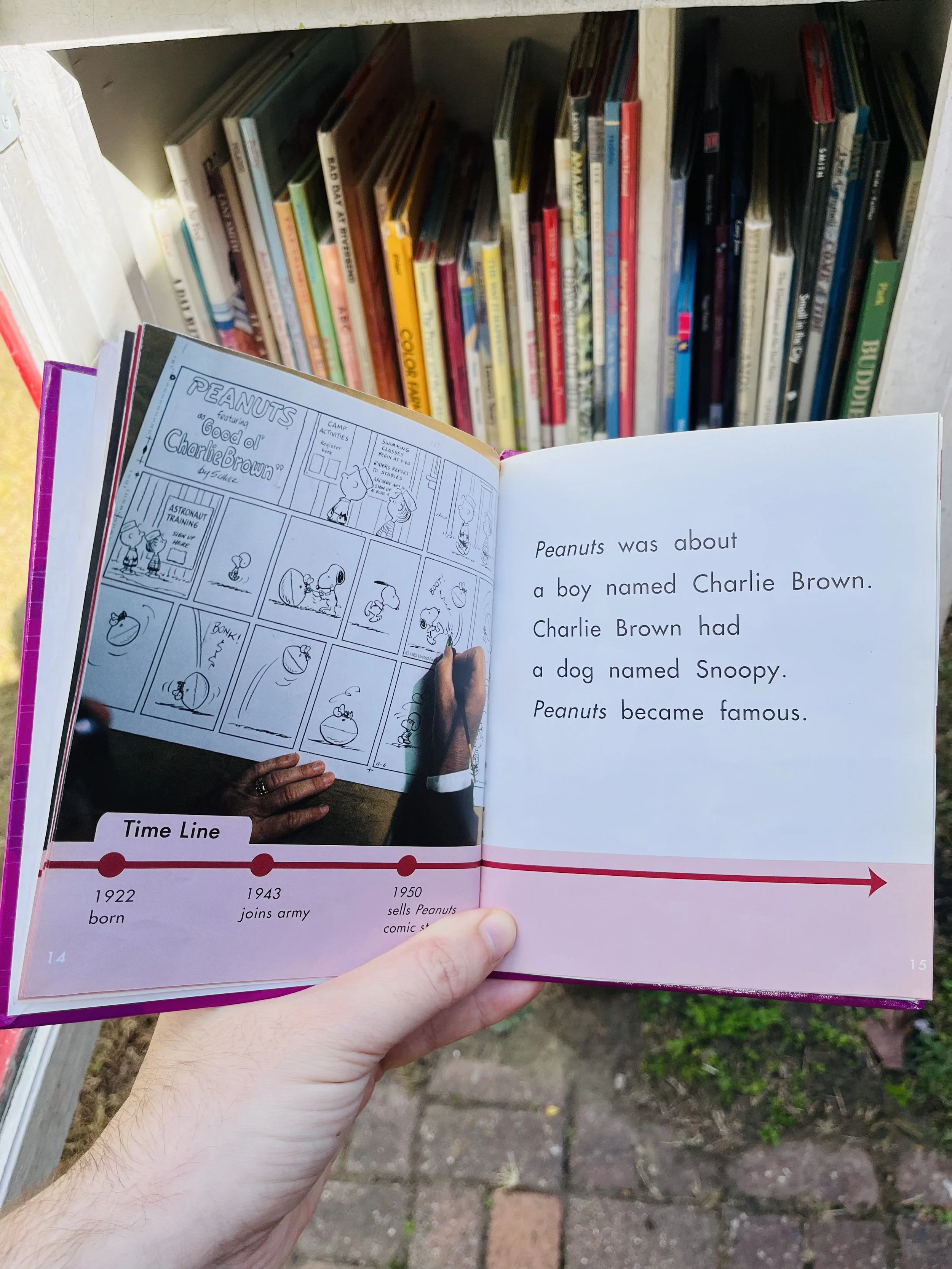
“Peanuts was about a boy named Charlie Brown. Charlie Brown had a dog named Snoopy. Peanuts became famous.”
That’s it.
Nothing about WHY Charlie Brown and Snoopy became famous. Nothing about how Schulz’s characters helped define popular culture for decades, no mention of Charlie Brown becoming a heroic symbol for “losers” everywhere or Snoopy’s genre-defying slew of alter egos: The WWI flying ace, the author, the vulture, the world-famous grocery clerk, etc. No mention of the fact that everyone thinks Charlie Brown is bald, but really he just has a super tight 1950s style crew cut, as was popular when he was created.
No Linus or Lucy, no Sally or Schroeder, no Peppermint Patty, Marcie, Shermy, Pigpen, Woodstock…
Nothing about how Schulz drew nearly EIGHTEEN THOUSAND comics, one every day for fifty years, by himself - by hand, with ink on paper. (Though you can see him pretending to work on one in the above photo, so I guess it’s all implied?)
Just three facts in a row. Peanuts was about a boy, and the boy had a dog, and the comic became famous.
Fascinating, right?
The one other photo is from the glossary at the back, possibly my favorite part:
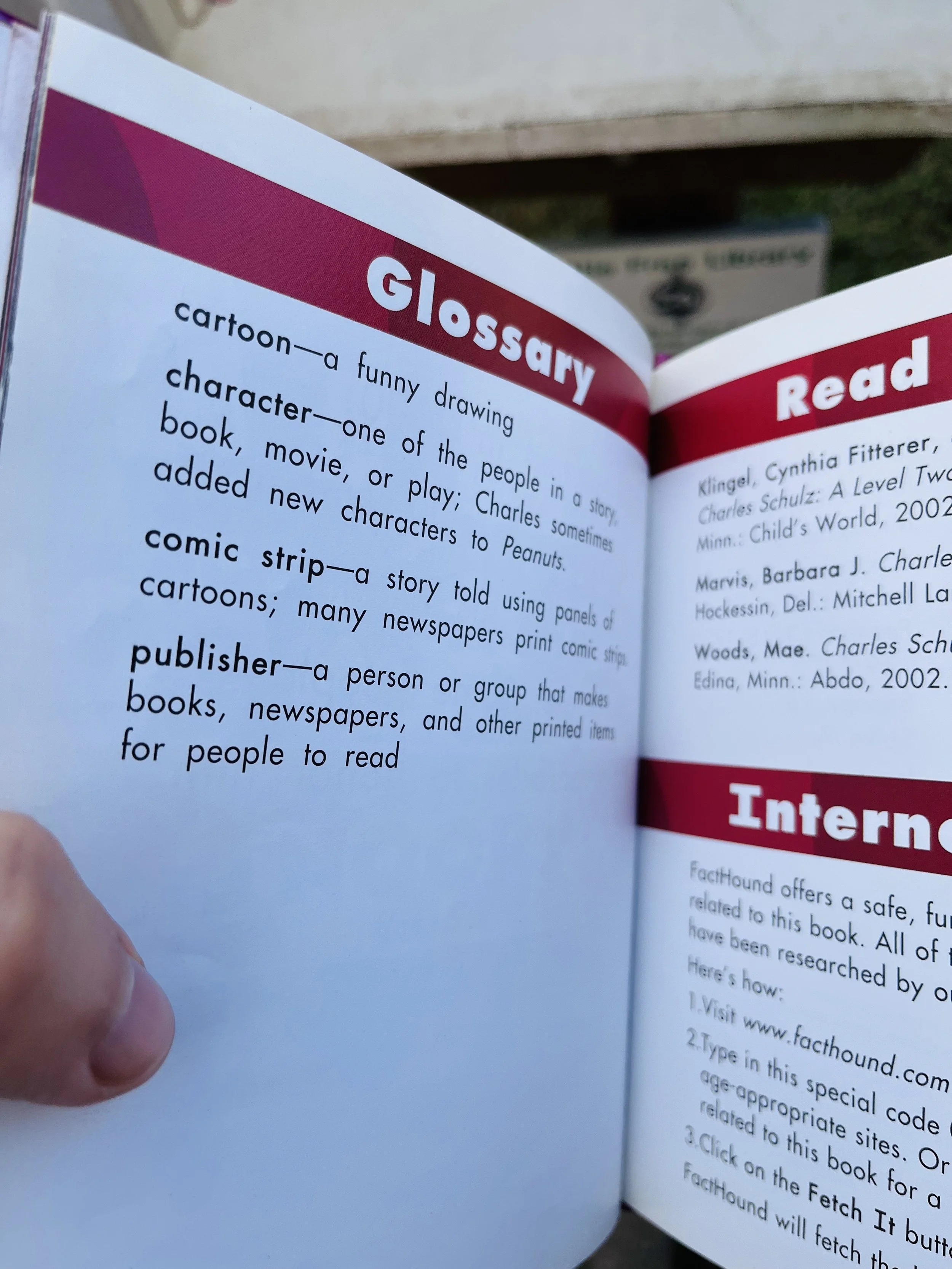
I particularly like the definitions for CARTOON and COMIC STRIP.
Cartoon is defined as “a funny drawing,” and a Comic Strip is “a story told using panels of cartoons.”
Those are refreshingly simple definitions. Cartoonists often tie ourselves up in knots trying to define what a comic is or isn’t, or to make it sound more “artistic,” “sophisticated,” or “high art.” The term “graphic novel” has been argued over for at least thirty years.
Schulz himself said in an interview:
“We tend to forget that cartooning is still the drawing of funny pictures. Comic strips should be fun to look at.”
Even if the comic itself isn’t always funny, it should be fun to look at.
The other thing that charmed me about the definition in this book, though, was that it did not define “panel” - arguably the one word that a child might not understand. Many adults don’t!
This made me wonder about why comic panels are even called panels to begin with as I walked around the park - something I hadn’t ever considered.
Apparently, the Old French word panel meant a piece of cloth or a section of something larger. Over time, it came to describe a distinct, usually rectangular section of a wall, door, or other surface.
I don't know exactly when cartoonists began using the term - I would guess Rodolphe Töpffer had something to do with it in the 1800s, when he started writing about comics. Interestingly, the French use the word “case” and not “panel” for a comics panel. And case means a compartment, box, or small enclosed space. But that word comes from the Latin casa, meaning a small hut, and is related to the Spanish casilla, a square on a checkerboard! So regardless of language of origin, it seems to me the meaning is essentially architectural - a comic strip is divided into panels just as a door might be divided into panels.
Go figure.
Anyway, I did not keep the book, since the books were there for kids. But I snapped these few pictures, and even though I’ve been cartooning since I could hold a crayon, I think I learned something.
So next time the opportunity presents itself, take a little walk in the park and see what you find.