Little Brother Hugo
Welcome back!
In the October issue of The Poet Quarterly, I shared an original piece of Frank King artwork from my collection, and wrote a little about it. I wanted to expand on that piece a little bit more, and figured this would be the best place to do so.
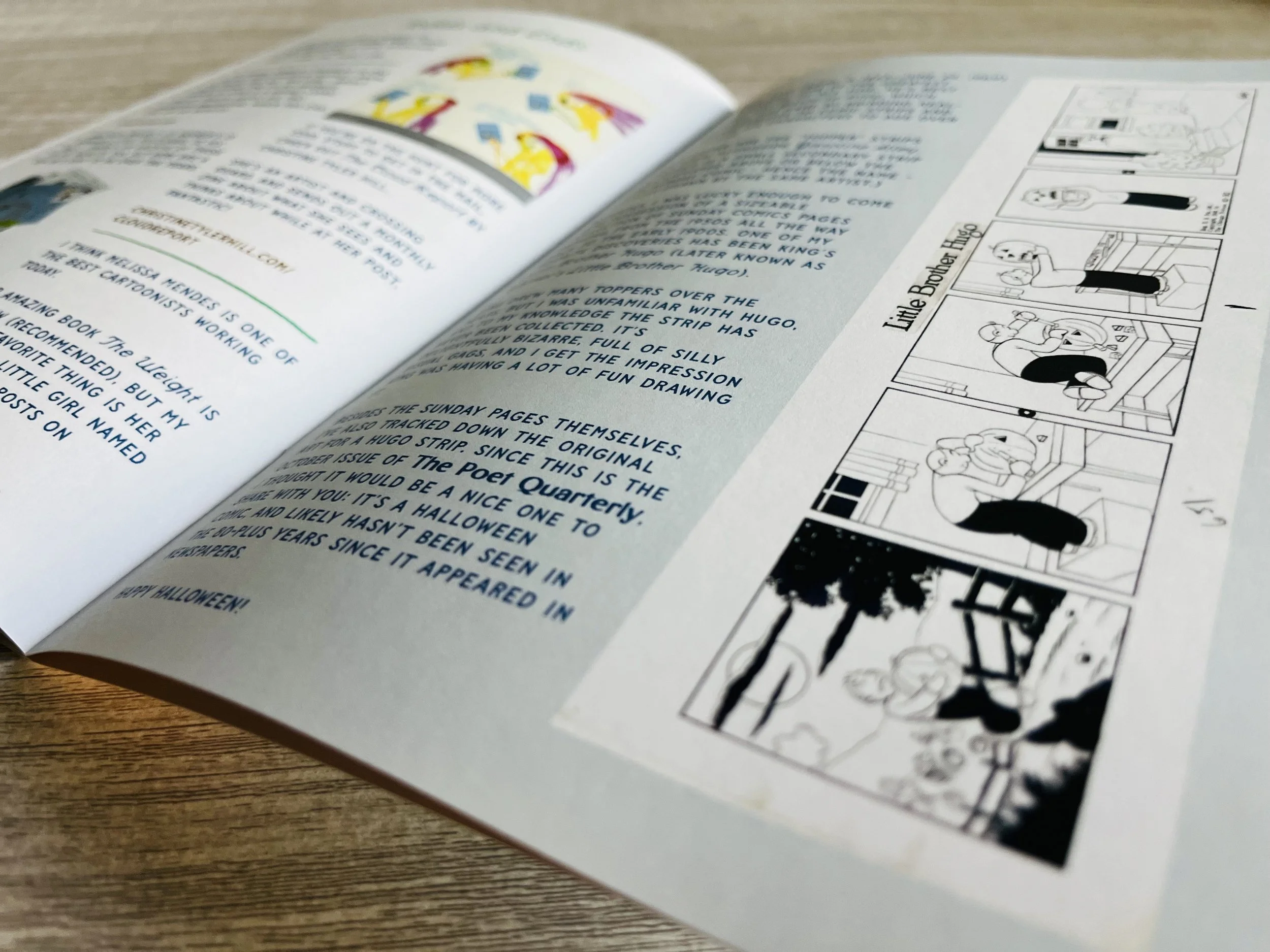
The Poet Quarterly features more than just The Poet
Earlier this year, to my amazement, I came into the possession of a fairly large collection of vintage Sunday comics supplements, mostly from the ‘40s but some dating as far back as 1902. Originally, a comics page averaged 14 × 20 inches, and most were occupied by a single comic!
Of course I was delighted to find some of my favorites in their original massive format, and in absolutely beautiful color. But I was equally excited to find strips I knew little about or had never even heard of.
By the ‘40s, newspapers had started downsizing, and the average comics page was 11 × 15 inches, featuring two or three strips. Still much larger than what we have today! Occasionally, the third strip would be the “topper” of a more popular comic. Toppers were bonus comics, usually drawn by the same cartoonist as the headlining comic, that ran either above or below the main strip.
Frank King had several toppers over the years, including That Phoney Nickel (following the travels of a fake coin changing hands from person to person), Puny Puns (as you can imagine, silly illustrated puns) - and spin-offs from Gasoline Alley, like the subject of this little post: Wilmer’s Little Brother Hugo.
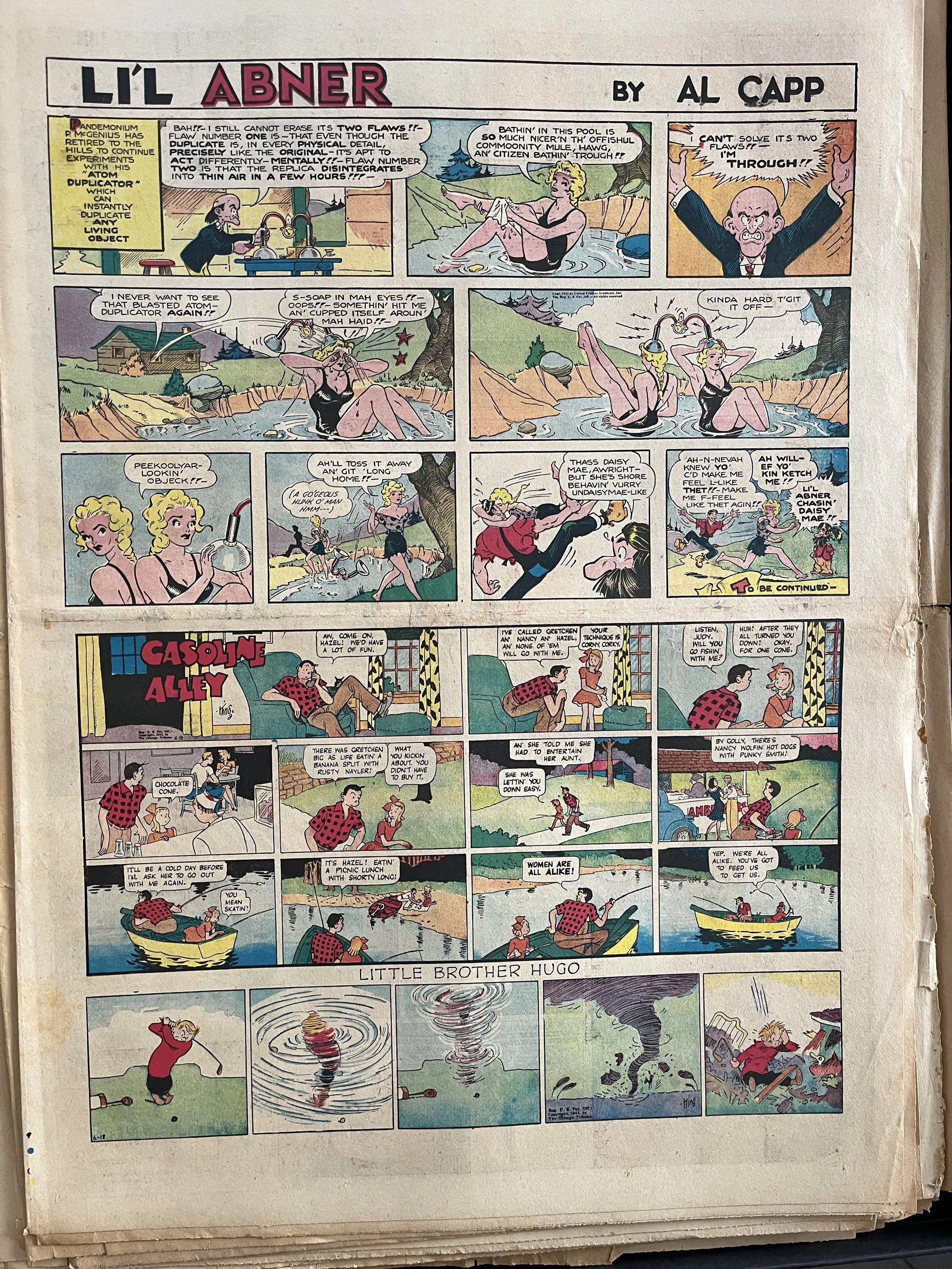
In the above example, from June 18th, 1944, Li’l Abner and Gasoline Alley are featured, supported with a Little Brother Hugo topper.
Throughout the collection, I discovered I now own a significant amount of several comics that have not been widely written about or collected over the years. There are a few of those I’m sure I’ll write more about here eventually, but today I just wanted to show you a few more examples of Little Brother Hugo.
At the time these strips were drawn, Frank King employed Bill Perry as his assistant (who took over the Sunday pages in 1951), so there is a chance that this era of Hugo was drawn by Perry but signed by King. These strips are early enough, though, that it could just be King’s work. I’m not a scholar - I’m just a fan and fellow cartoonist, so take these specifics with a grain of salt.
Either way, I find the Hugo strips extremely charming. They’re very silly compared to the dailyness of Gasoline Alley - and more fanciful than the often poetic and thoughtful Sunday Gasoline Alley entries. Notice also how the title lettering varies from example to example. Nice.
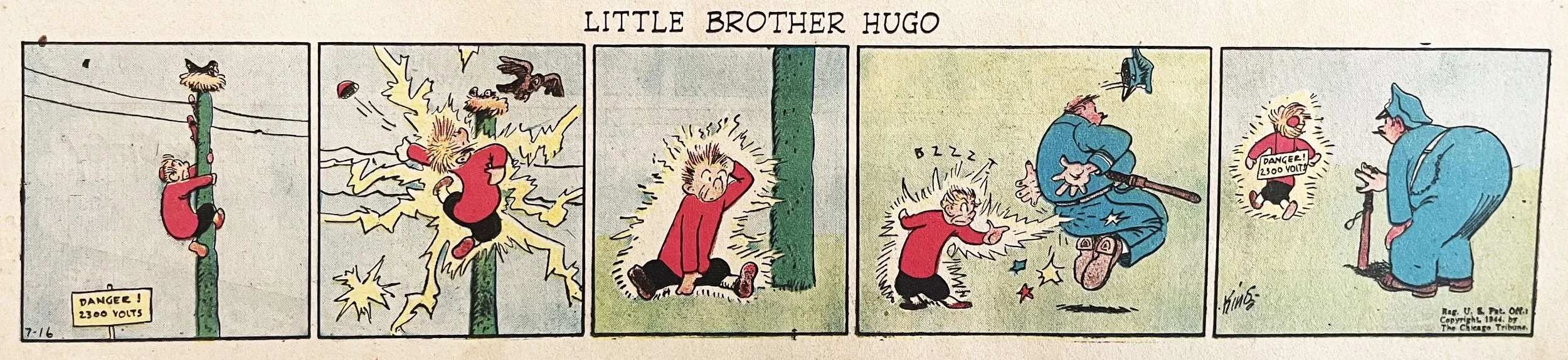
Hugo zaps a police officer after getting shocked trying to reach a bird nest on a telephone wire.
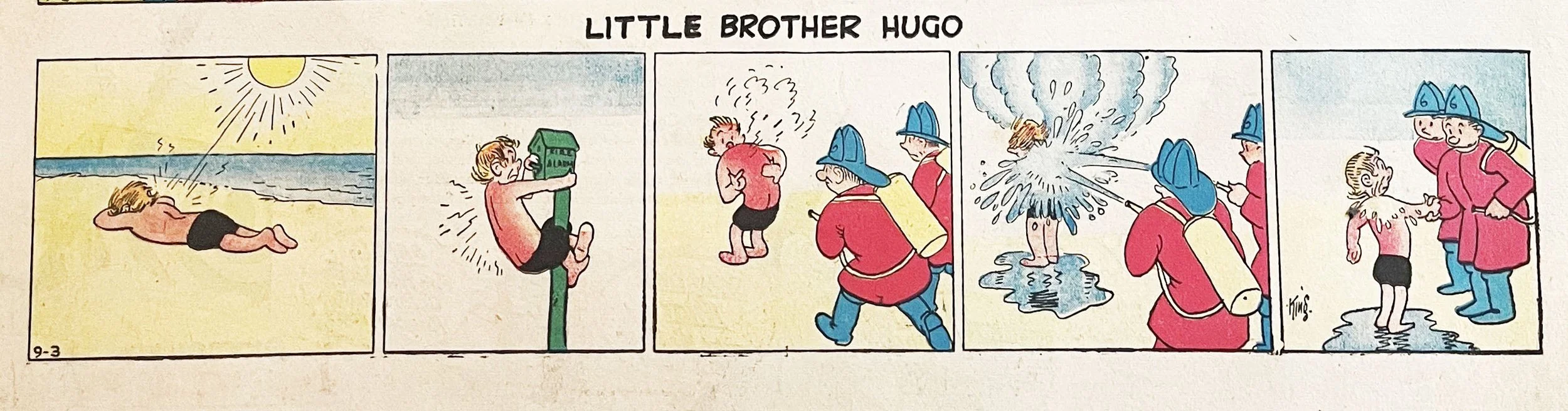
Hugo pulls the fire alarm for sunburn assistance from the fire department.
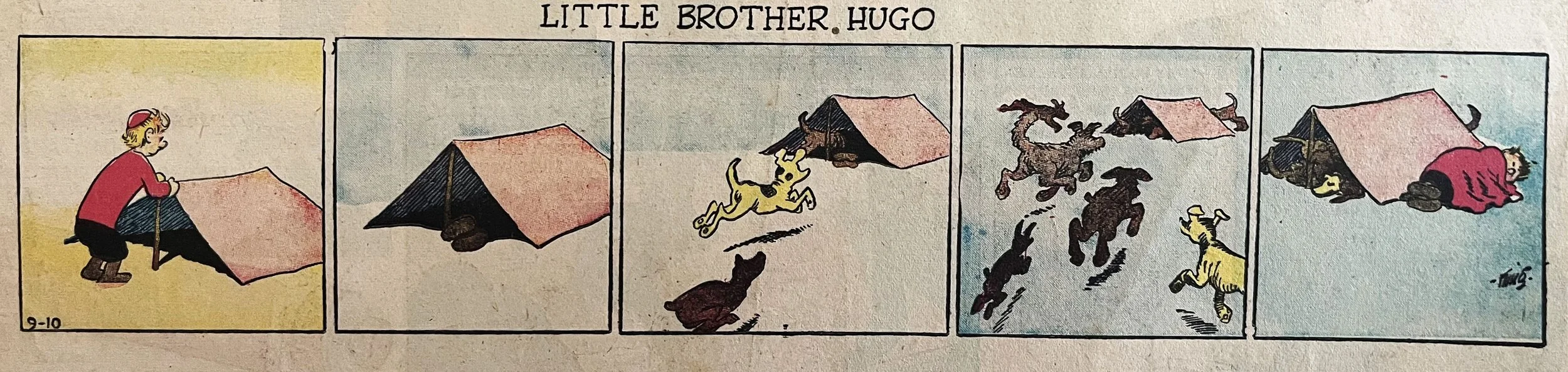
Hugo’s shelter shelters the neighborhood strays.
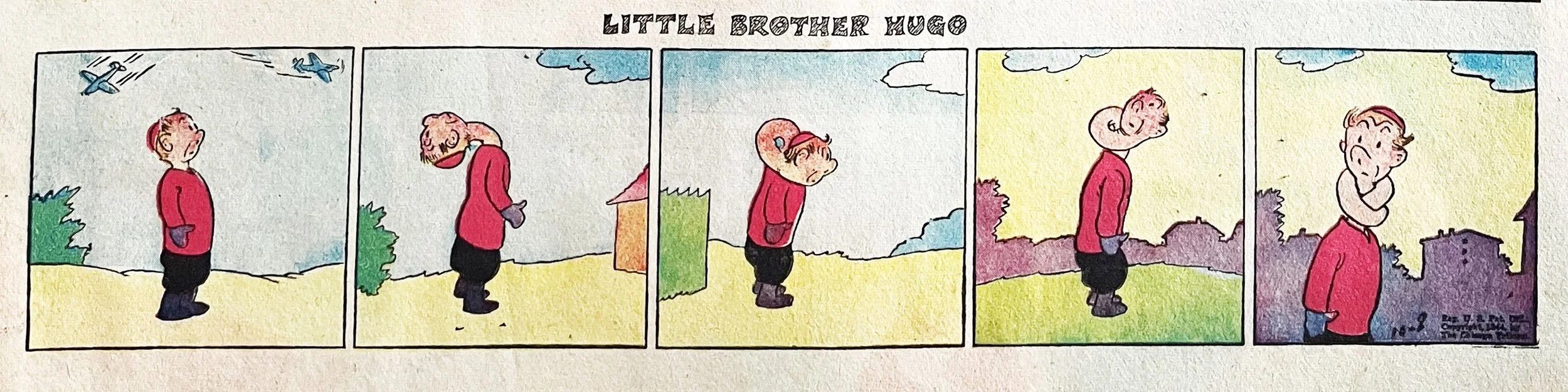
Hugo gets twisted up watching the airshow. I particularly like how weird this one is - that last panel is amazing.
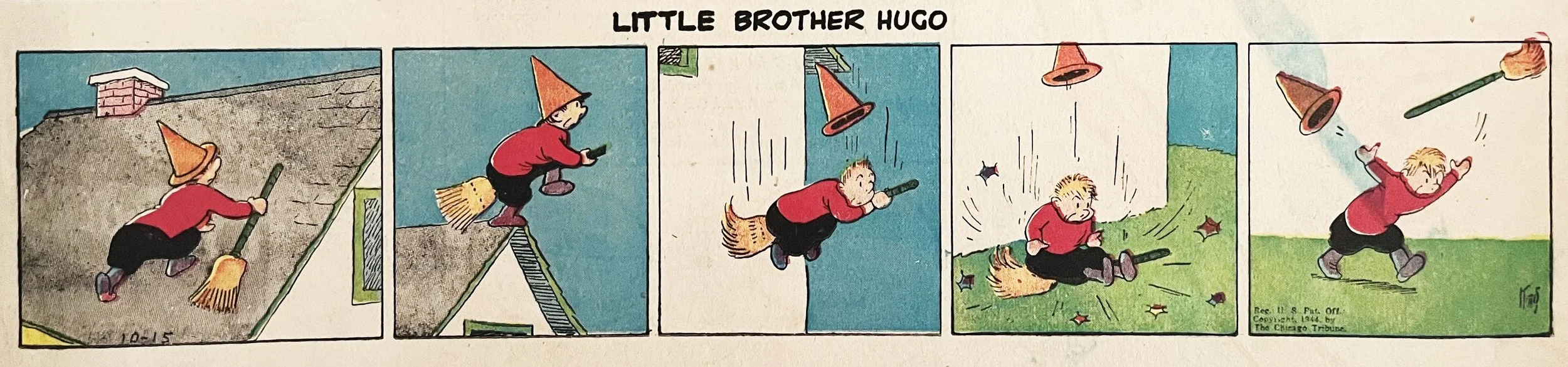
Hugo takes a flying leap before Halloween. All you Practical Magic fans out there should appreciate this one.
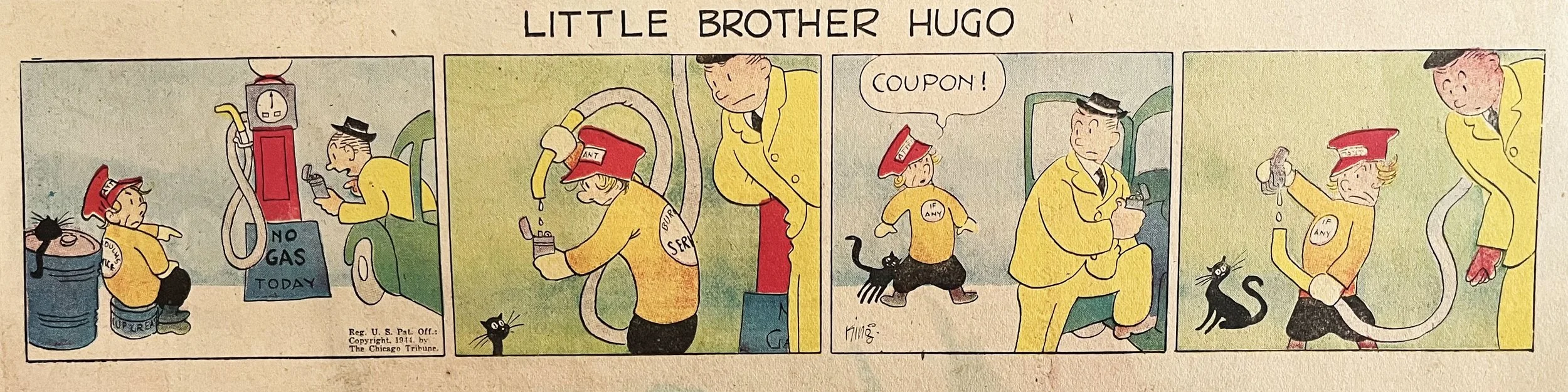
Hugo gives (and takes) a few drops of gasoline for a lighter in this WWII era strip. I really like the cat in panel three.
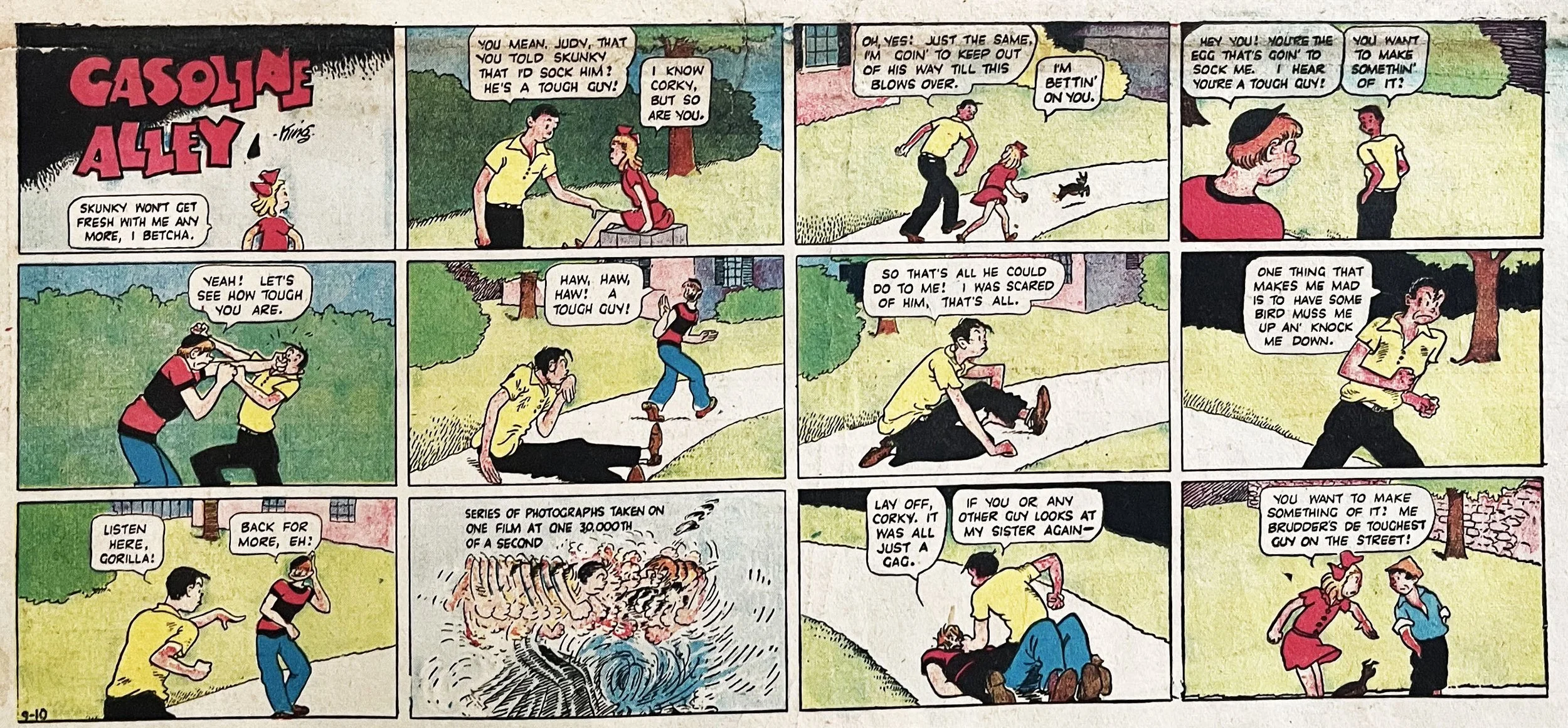
One non-Hugo drawing from this same batch of strips that I really liked was this one from the September 10th, 1944 Gasoline Alley:
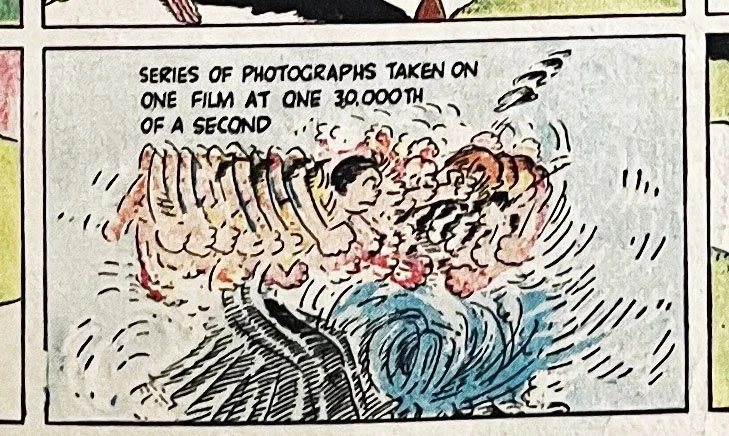
Apart from it being a very fun drawing of Corky pummelling Skunky (gotta love ‘40s kid names), the specificity of the “film speed” (“taken on one film at one 30,000th of a second”) piqued my curiosity. As this was during World War II, I wondered if high-speed photography was still relatively new - or at least new enough to warrant King referencing it as a sight gag in his comic strip. Turns out, Dr. Harold "Doc" Edgerton was revolutionizing photography at precisely this time, taking high-speed photos of milk droplets, hummingbird wings, and speeding bullets - and developing powerful strobes for nighttime aerial reconnaissance to aid the Normandy invasion. Pretty bonkers.
Here’s that full strip too, because why not?